¡Hola!
Bonjour
こんにちは
안녕하세요
Hallo
Hello
Your first hour of a new languageSpanishFrenchJapaneseKoreanGermanEnglish.
One hour, taught live, in a small group. Greet people, introduce yourself, count to ten and order a coffee, and say all of it out loud from the first minute.
- Up to 12 people
- You speak all hour
- Phrase sheet to keep
Learn it through what you love.Four ways into Spanish.Four ways into French.Four ways into Japanese.Four ways into Korean.Four ways into German.Four ways into English.
Anime, K-pop, reggaeton, flirting, a job interview or a beer tent: every class is one live hour for complete beginners, taught in English. Choose a language and the whole site switches to it.

Japanese · Anime
Anime Japanese
Understand the Japanese you hear in anime, and know which of it you can safely say to real people.
Next class
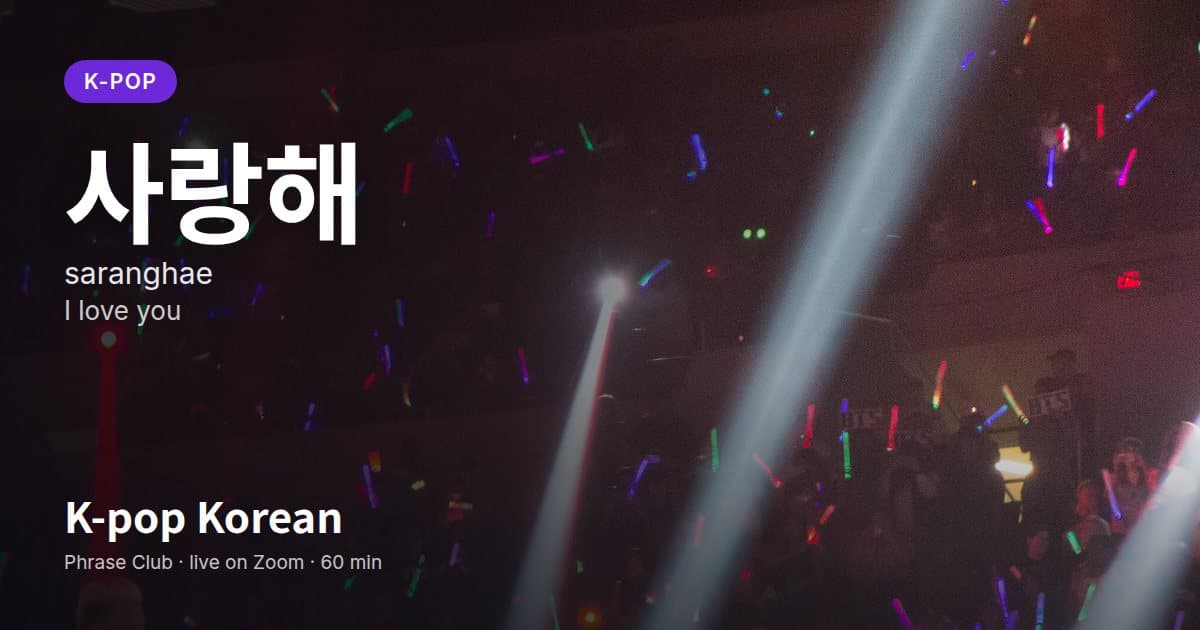
Korean · K-pop
K-pop Korean
Recognise the Korean words you hear most in K-pop, read song titles in Hangul and chat like a fan.
Next class

English · Negotiation
Talk Like Trump
Make an offer, push back and close a deal in big, confident English.
Next class
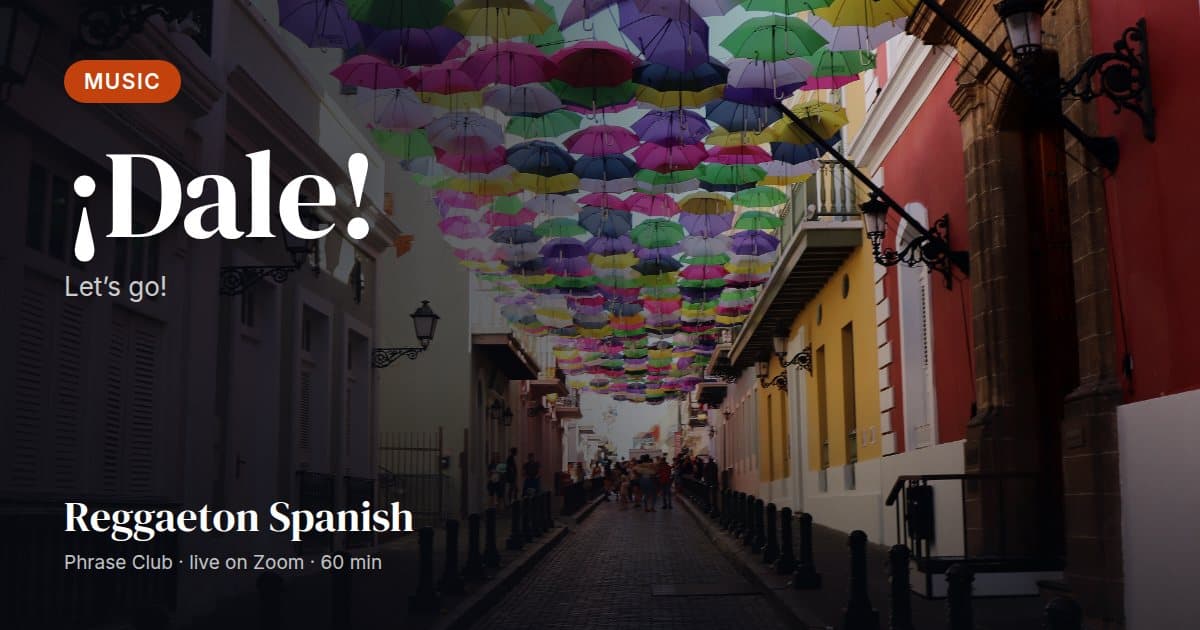
Spanish · Music
Reggaeton Spanish
Catch the everyday and slang words in reggaeton and Latin pop, and use the friendly ones on the dance floor.
Next class

French · Flirting & travel
Flirting in French
Start a chat at a café or bar, pay a nice compliment, ask someone for a drink, and say yes or no gracefully in French.
Next class
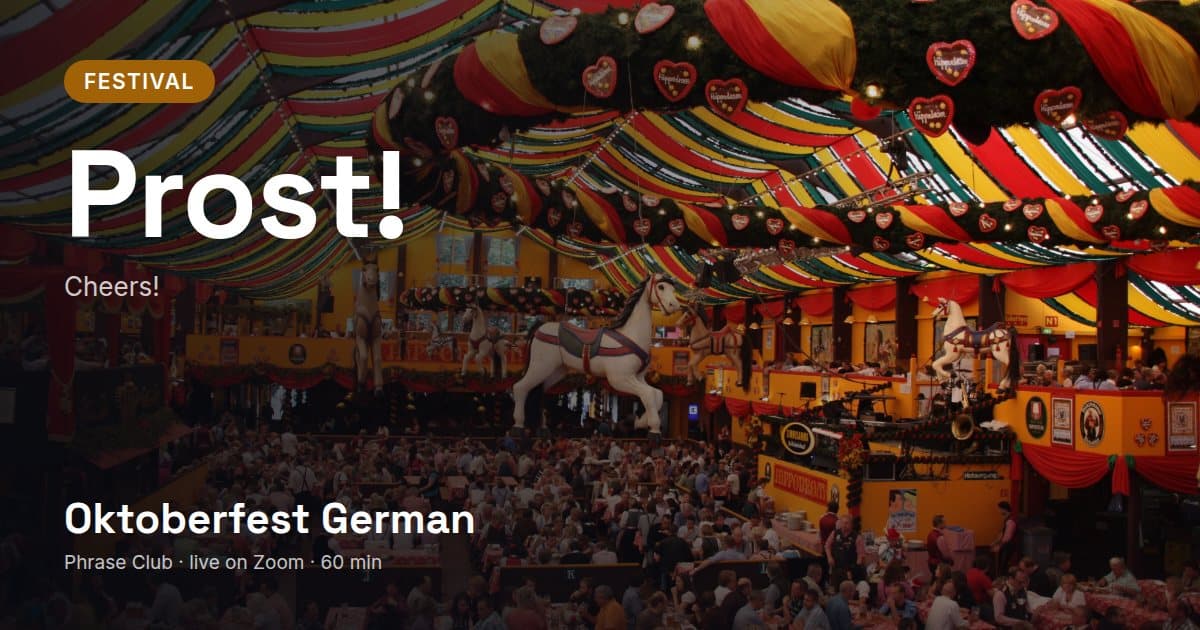
German · Festival
Oktoberfest German
Order a Maß, toast with "Prost!", make friends at the table and get home safely, in German.
Next class
Spanish · Music
Reggaeton Spanish
Catch the everyday and slang words in reggaeton and Latin pop, and use the friendly ones on the dance floor.
Next class
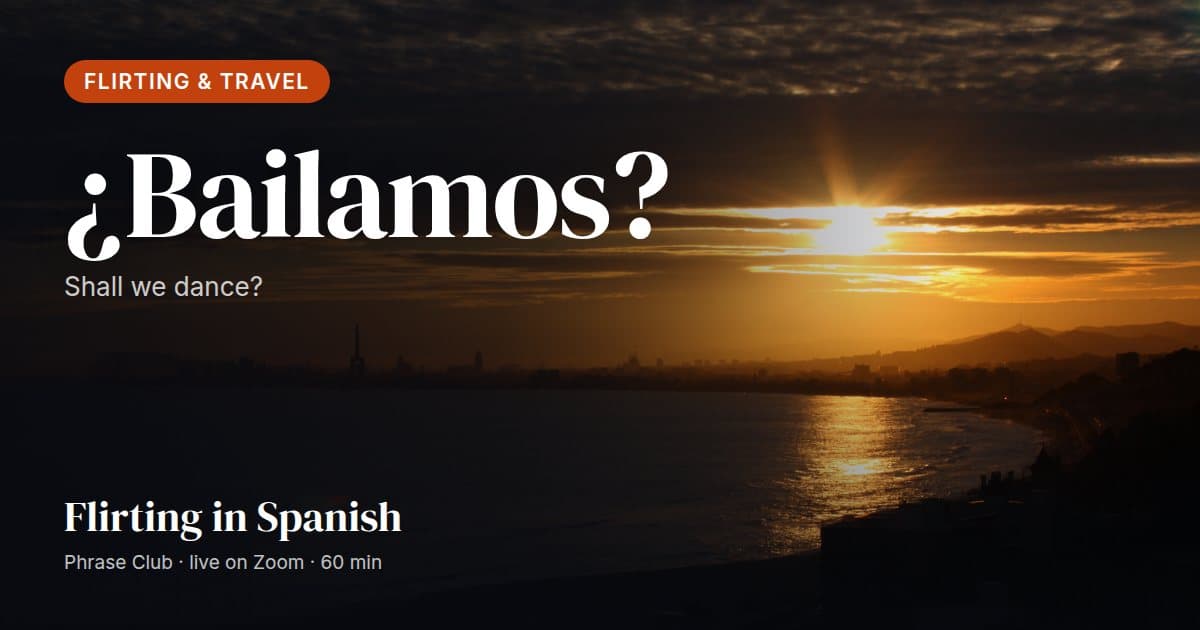
Spanish · Flirting & travel
Flirting in Spanish
Start a chat, give a nice compliment, ask someone to dance or for a drink, and say yes or no gracefully in Spanish.
Next class
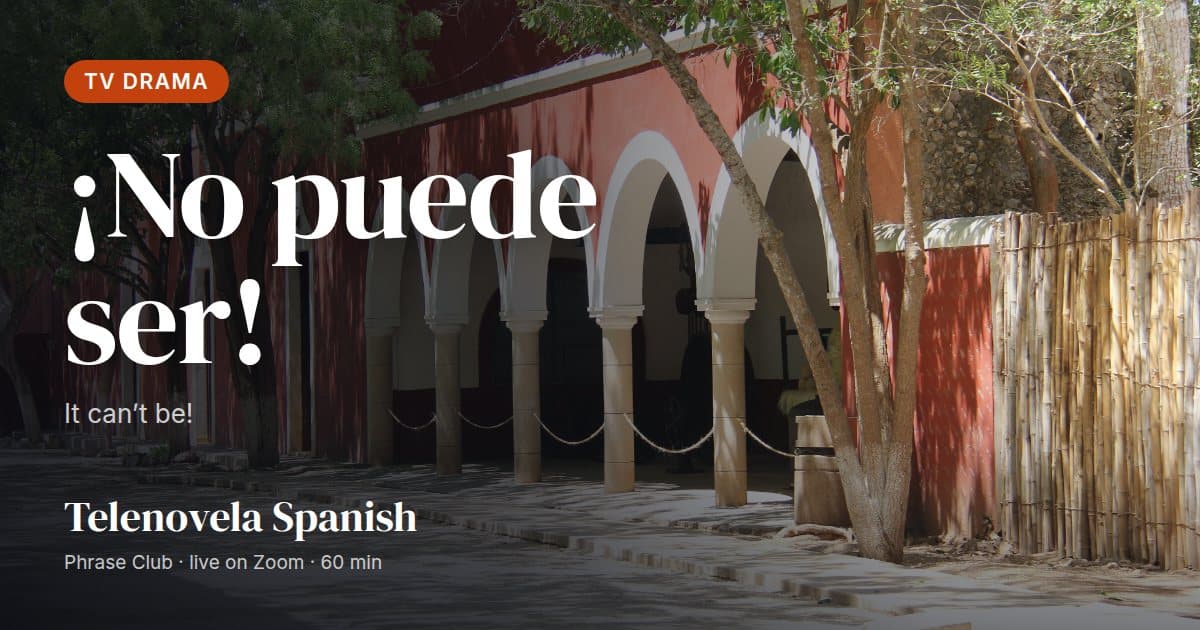
Spanish · TV drama
Telenovela Spanish
Gasp, accuse, confess and declare your love in Spanish, then act out your own telenovela scene.
Next class
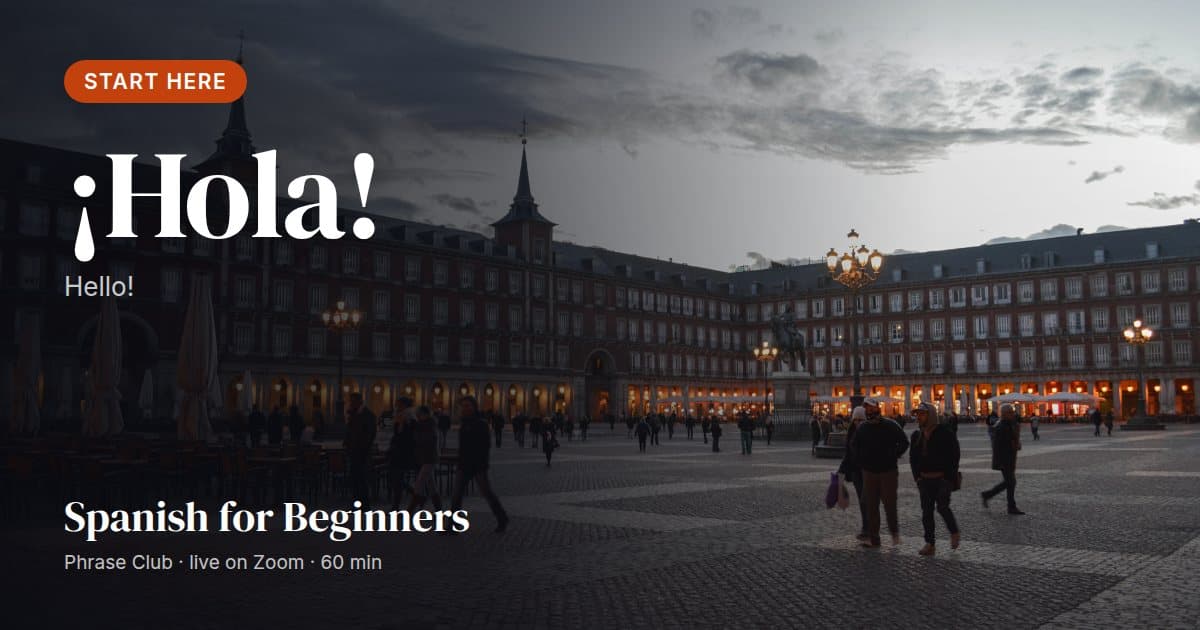
Spanish · Start here
Spanish for Beginners
Greet people, introduce yourself and order at a café in Spanish.
Next class
French · Flirting & travel
Flirting in French
Start a chat at a café or bar, pay a nice compliment, ask someone for a drink, and say yes or no gracefully in French.
Next class
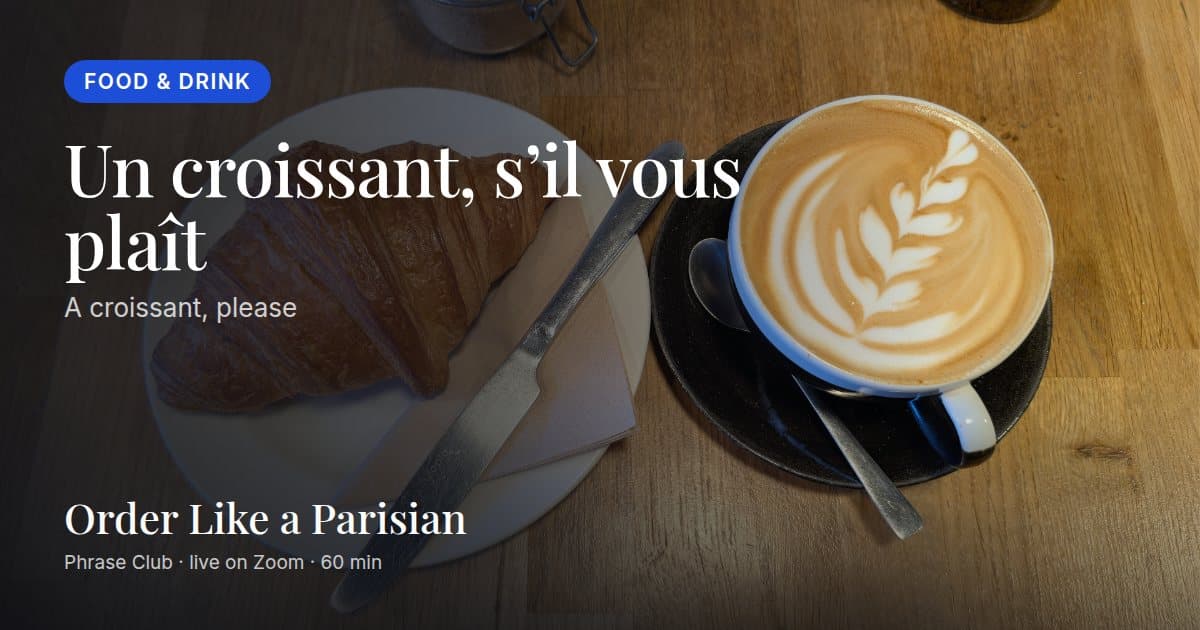
French · Food & drink
Order Like a Parisian
Order bread, coffee and a glass of wine in French, follow the politeness rituals and pay without stress.
Next class
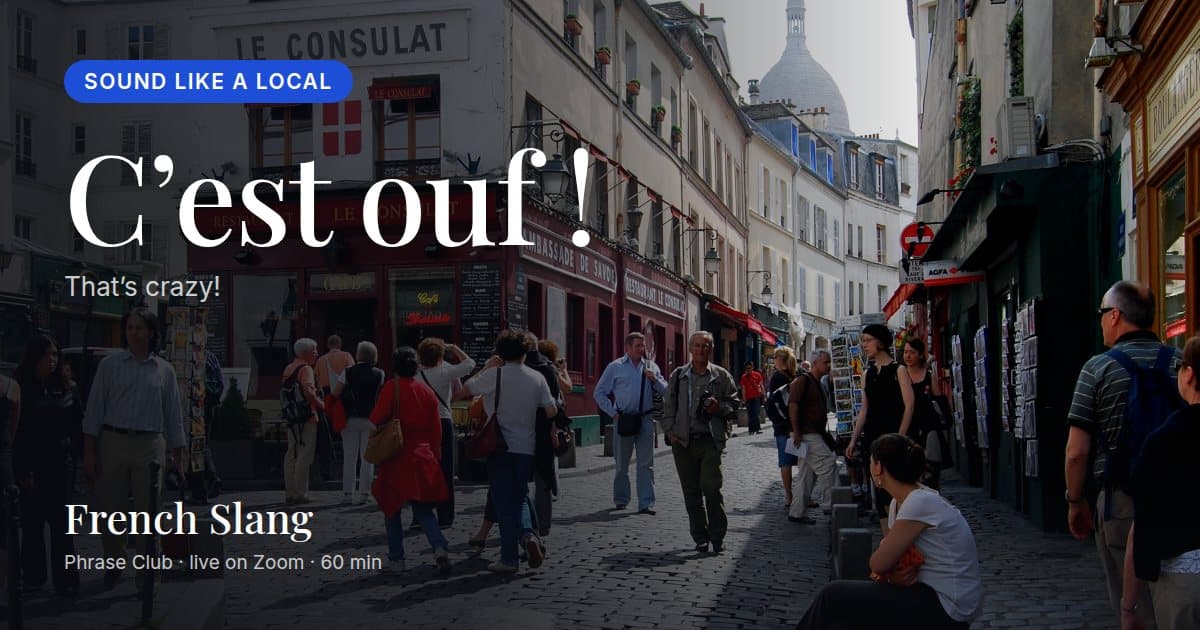
French · Sound like a local
French Slang
Understand how French people really talk, and use a handful of casual words and fillers in the right places.
Next class
French · Start here
French for Beginners
Greet people, introduce yourself and order at a café in French.
Next class
Japanese · Anime
Anime Japanese
Understand the Japanese you hear in anime, and know which of it you can safely say to real people.
Next class
Japanese · Travel
Tokyo Trip Japanese
Handle the konbini, the trains and a ramen shop in Tokyo with simple, polite Japanese.
Next class
Japanese · Flirting
Flirting in Japanese
Start a friendly conversation, give a compliment, ask someone out and say or hear no gracefully, in polite Japanese.
Next class
Japanese · Start here
Japanese for Beginners
Greet people, introduce yourself and order at a café in Japanese.
Next class
Korean · K-pop
K-pop Korean
Recognise the Korean words you hear most in K-pop, read song titles in Hangul and chat like a fan.
Next class
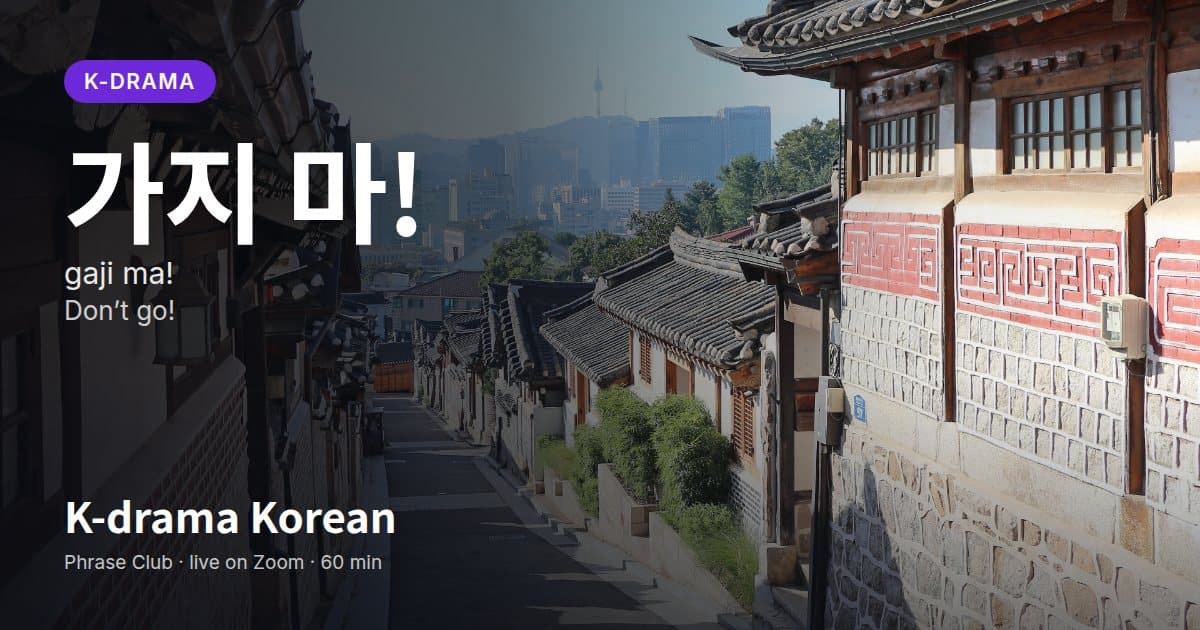
Korean · K-drama
K-drama Korean
Understand the Korean you hear in every K-drama, and know when drama speech would be rude in real life.
Next class

Korean · Flirting
Flirting in Korean
Start a friendly conversation, give a compliment, swap KakaoTalk, ask someone out and say or hear no gracefully, in polite Korean.
Next class
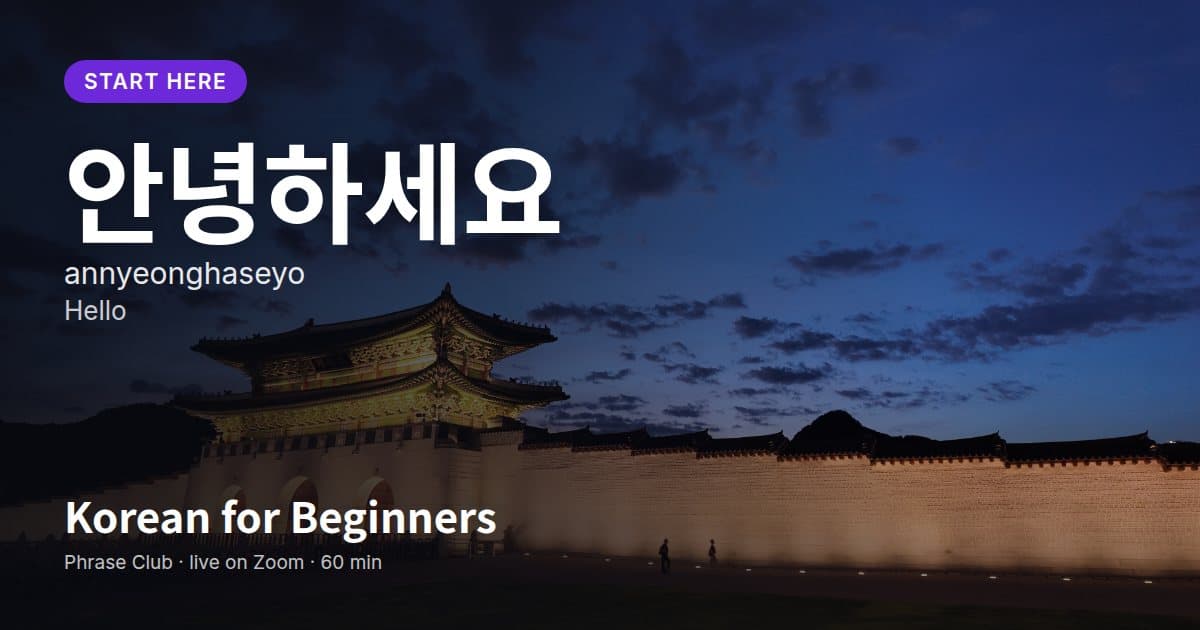
Korean · Start here
Korean for Beginners
Greet people, introduce yourself and order at a café in Korean.
Next class
German · Festival
Oktoberfest German
Order a Maß, toast with "Prost!", make friends at the table and get home safely, in German.
Next class
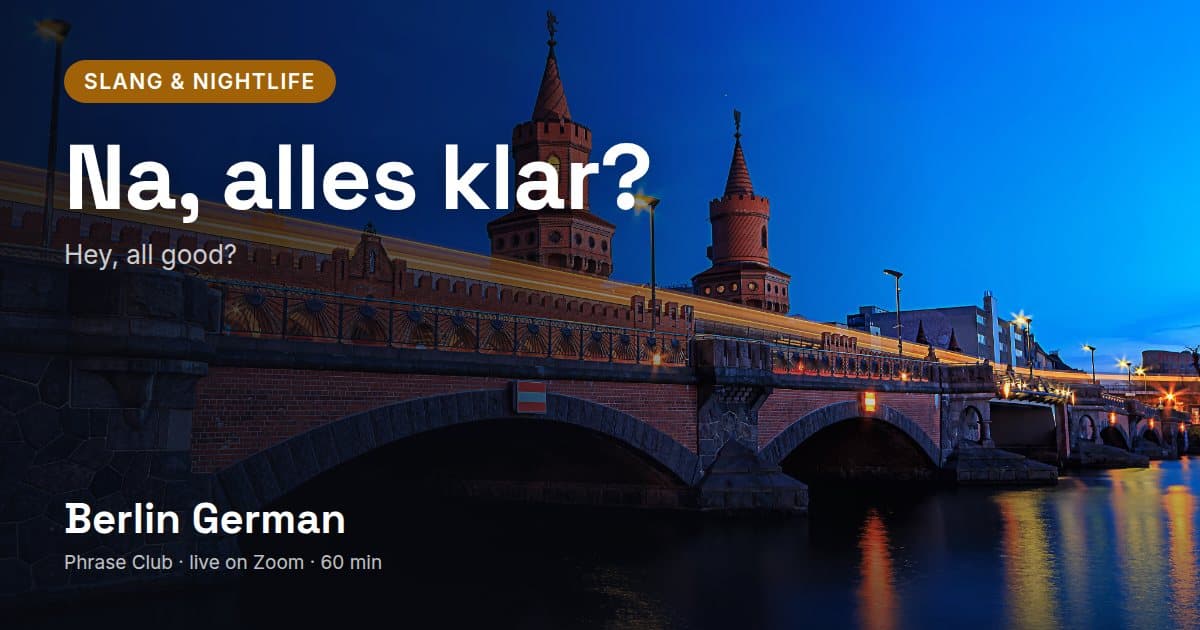
German · Slang & nightlife
Berlin German
Chat in casual du-German, understand Berlin slang, shop at a Späti and get around at night.
Next class
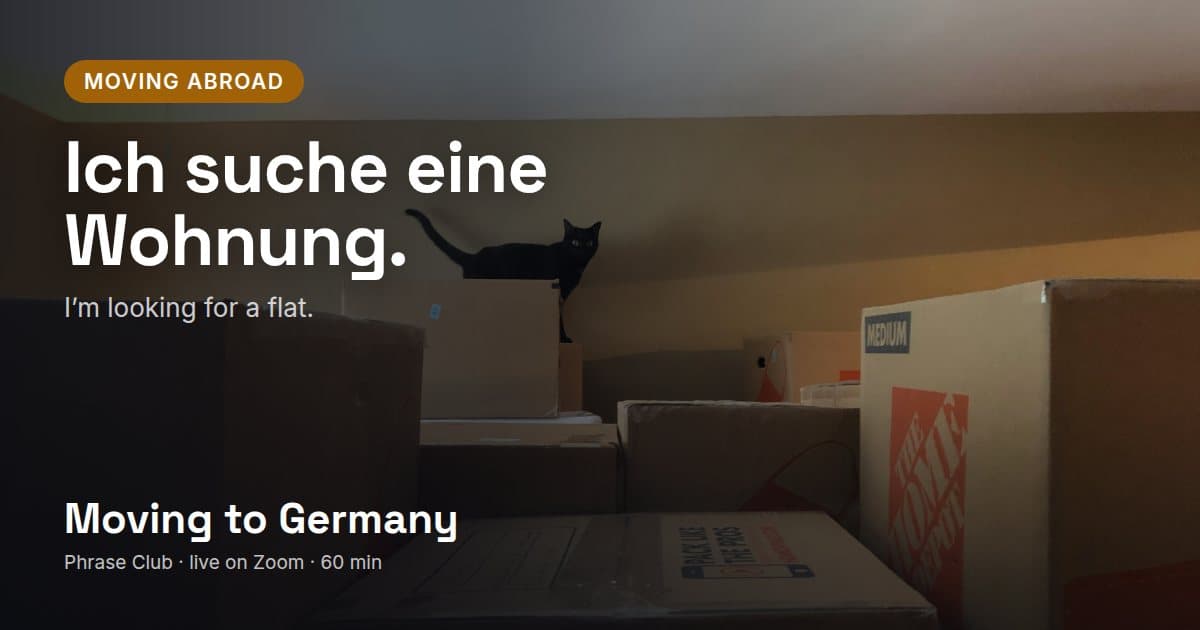
German · Moving abroad
Moving to Germany
Handle a flat viewing, register your address and book a doctor's appointment in simple, polite German.
Next class
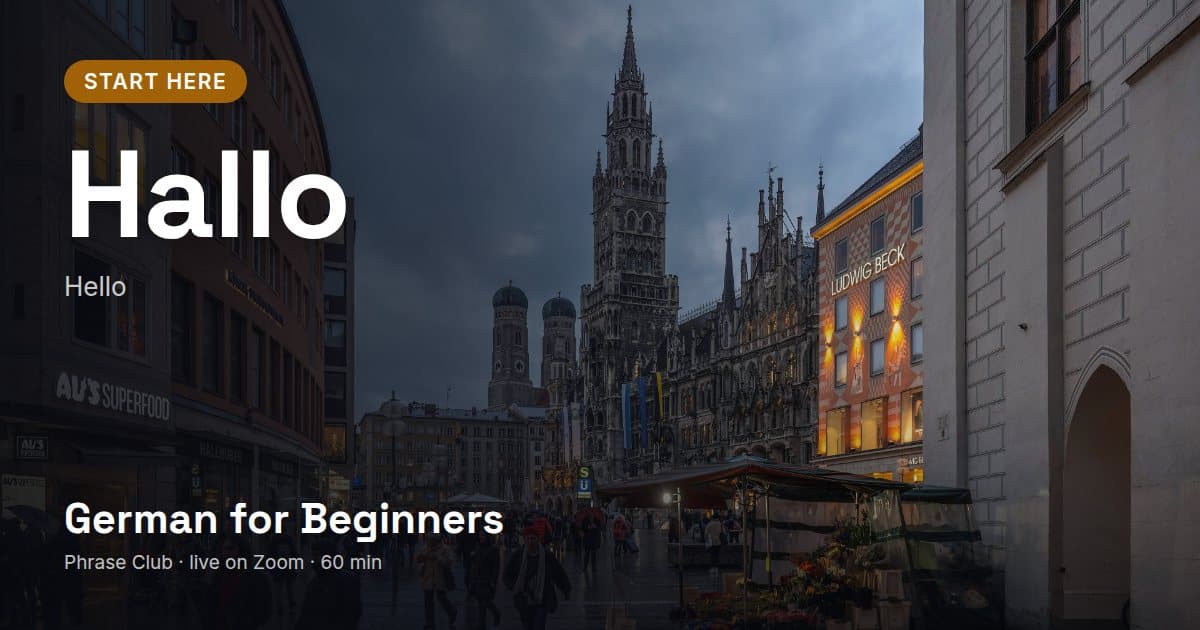
German · Start here
German for Beginners
Greet people, introduce yourself and order at a café in German.
Next class
English · Negotiation
Talk Like Trump
Make an offer, push back and close a deal in big, confident English.
Next class
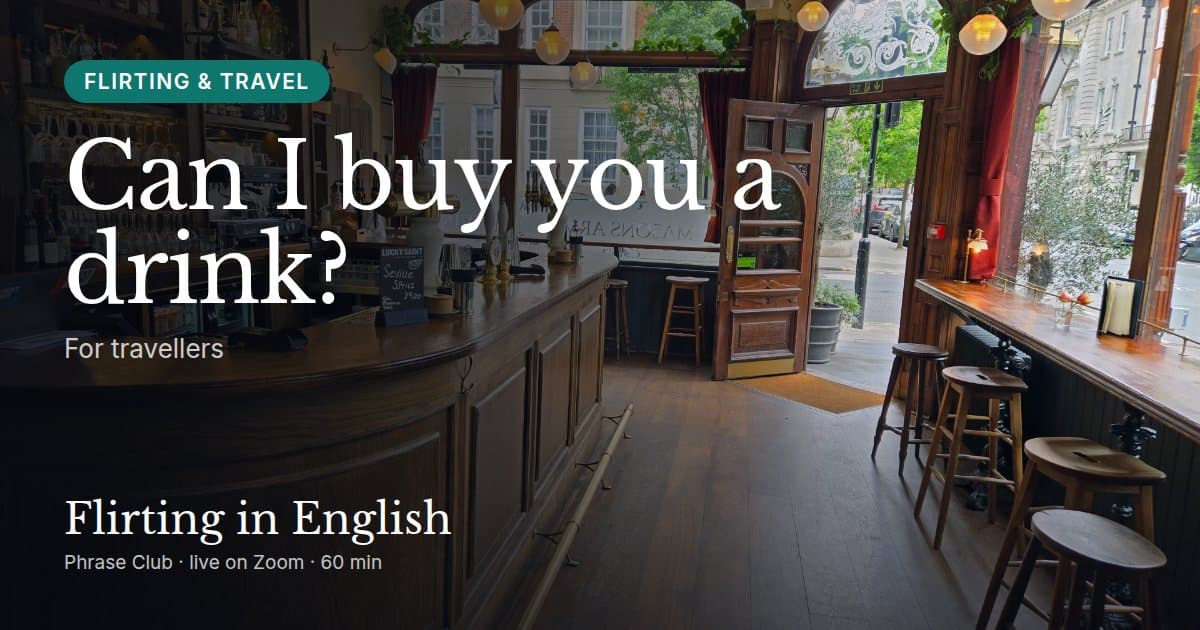
English · Flirting & travel
Flirting in English
Start a chat, give a nice compliment and ask someone out in English, respectfully.
Next class

English · Career
English for Job Interviews
Introduce yourself, talk about your experience and answer common interview questions in clear, simple English.
Next class
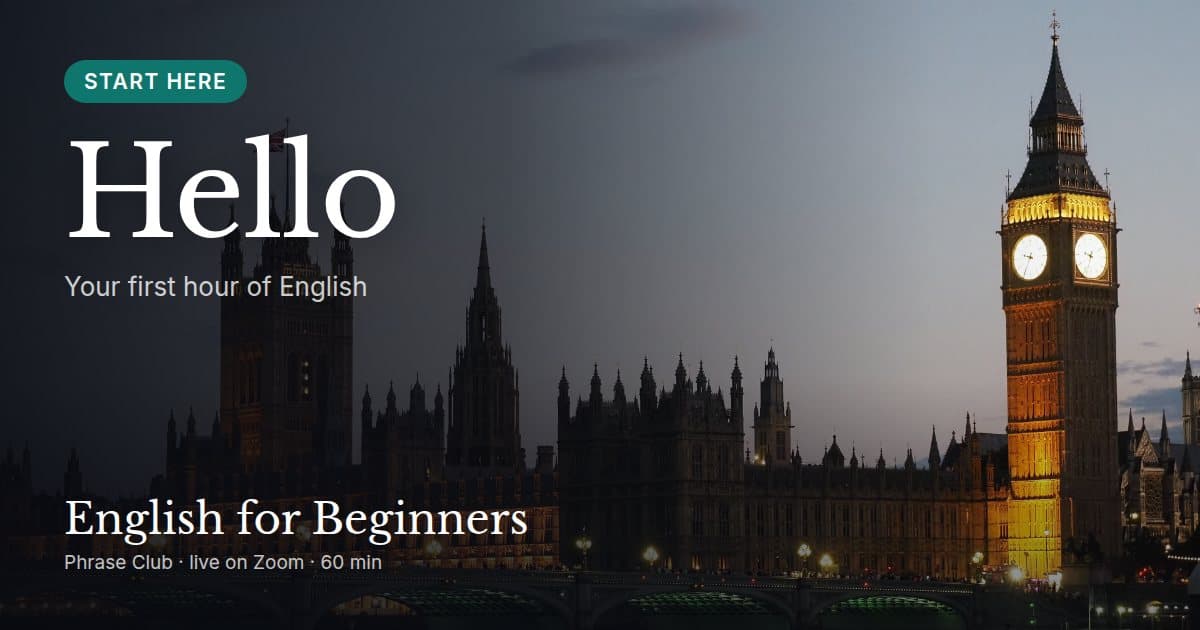
English · Start here
English for Beginners
Greet people, introduce yourself and order at a café in English.
Next class
Phrase Club Pass
Every class, in every language: anime Japanese on Monday, flirting in French on Friday. One monthly payment, cancel any time. Choose it when you book your first class.
Sixty minutes, and most of them you are talking.
Every class follows the same plan, built around what you need first when you meet someone or walk into a café. The teacher says it, you say it back, and then you use it with someone else.
Hola, me llamo Sam. Un café, por favor.
Spanish: Hi, my name is Sam. A coffee, please.
Bonjour, je m'appelle Sam. Un café, s'il vous plaît.
French: Hello, my name is Sam. A coffee, please.
はじめまして、サムです。コーヒーをください。
Hajimemashite, Samu desu. Kōhī o kudasai.
Japanese: Nice to meet you, I'm Sam. A coffee, please.
안녕하세요, 저는 샘이에요. 커피 주세요.
Annyeonghaseyo, jeoneun Saemieyo. Keopi juseyo.
Korean: Hello, I'm Sam. A coffee, please.
Hallo, ich heiße Sam. Einen Kaffee, bitte.
German: Hi, my name is Sam. A coffee, please.
Hi, my name is Sam. Could I have a coffee, please?
English: For students whose first language is not English.
What you can say by the end of the hour.
- 0′
Welcome
How the class works, and what the language sounds like.
- 5′
Sounds, or a first look at the script
The few sounds that make you understood. For Japanese and Korean, how the writing works.
- 12′
Greetings
Hello, goodbye, good morning, and the polite and casual versions.
- 20′
Introducing yourself
Your name, where you are from, nice to meet you, and asking back.
- 28′
Numbers 1 to 10
Counting, phone numbers and prices.
- 34′
At the café
Ordering, please and thank you, how much, the bill.
- 42′
Getting by
Sorry, I don't understand, more slowly please, where is the toilet?
- 48′
Practice in small groups
Breakout rooms of 2 or 3: meet someone and order a coffee, all in the language.
- 56′
Recap
Everything once more together, and what to practise this week.
Four steps, no app to install but Zoom.
1. Book a time
Choose a language and a class time. Your Zoom link arrives by email.
2. Join on Zoom
Headphones with a mic are best. Camera optional. Pen and paper help.
3. Speak
Repeat together, answer in the chat, then practise in small breakout rooms.
4. Keep the phrases
Your phrase sheet, with a pronunciation guide and a week of practice ideas, stays in your account.
What one hour can do, and what it can't.
One hour will not make you fluent, and we will not pretend it does. It gets you past the hardest part: saying the first words out loud to another person.
After the hour you can
- Greet people and say goodbye
- Introduce yourself and ask about them
- Count to ten and understand a price
- Order a drink and ask for the bill
- Say you don't understand, and ask them to slow down
One hour won't
- Make you fluent
- Teach grammar tables
- Replace practice: the phrase sheet is there for that
Do I need to know any of the language already?
No. Every class is for complete beginners. We start from hello, and everything is explained in English. If you already know a little, it will be a good warm-up, but it will feel easy.
What happens in the hour?
A short welcome, then the sounds (or, for Japanese and Korean, a first look at the writing), greetings, introducing yourself, numbers to ten, ordering at a café and the phrases that get you out of trouble. Then you practise in small breakout rooms and we finish with a recap. Each class page shows the hour minute by minute.
Will I have to speak?
Yes, that is the point, but gently. Most of the time the whole class repeats together with microphones on, so nobody is singled out. Near the end you practise in breakout rooms of 2 or 3. Your camera is up to you.
How big are the classes?
At most 12 people, so everyone gets to speak and ask questions.
Will I be fluent after an hour?
No, and anyone who promises that is not being straight with you. After the hour you can greet people, introduce yourself, count to ten, order a drink and handle not understanding. It is a real start, and the phrase sheet and a week of practice ideas help you keep it.
What do I keep afterwards?
Your phrase sheet: every phrase from the class with a pronunciation guide (and the romanisation for Japanese and Korean), plus what to practise in the week after. It stays in your account.